Industrial Panel Handling Systems
Industrial panel handling systems support a steady flow through panel saws, CNC routers and edge banding machines. Compare loading lifts, roller conveyors, movable trolleys and belt conveyors against your panel dimensions, stack weight and the layout of your production stations.
Loading and Unloading Lift
View Panel Loading and Unloading Lift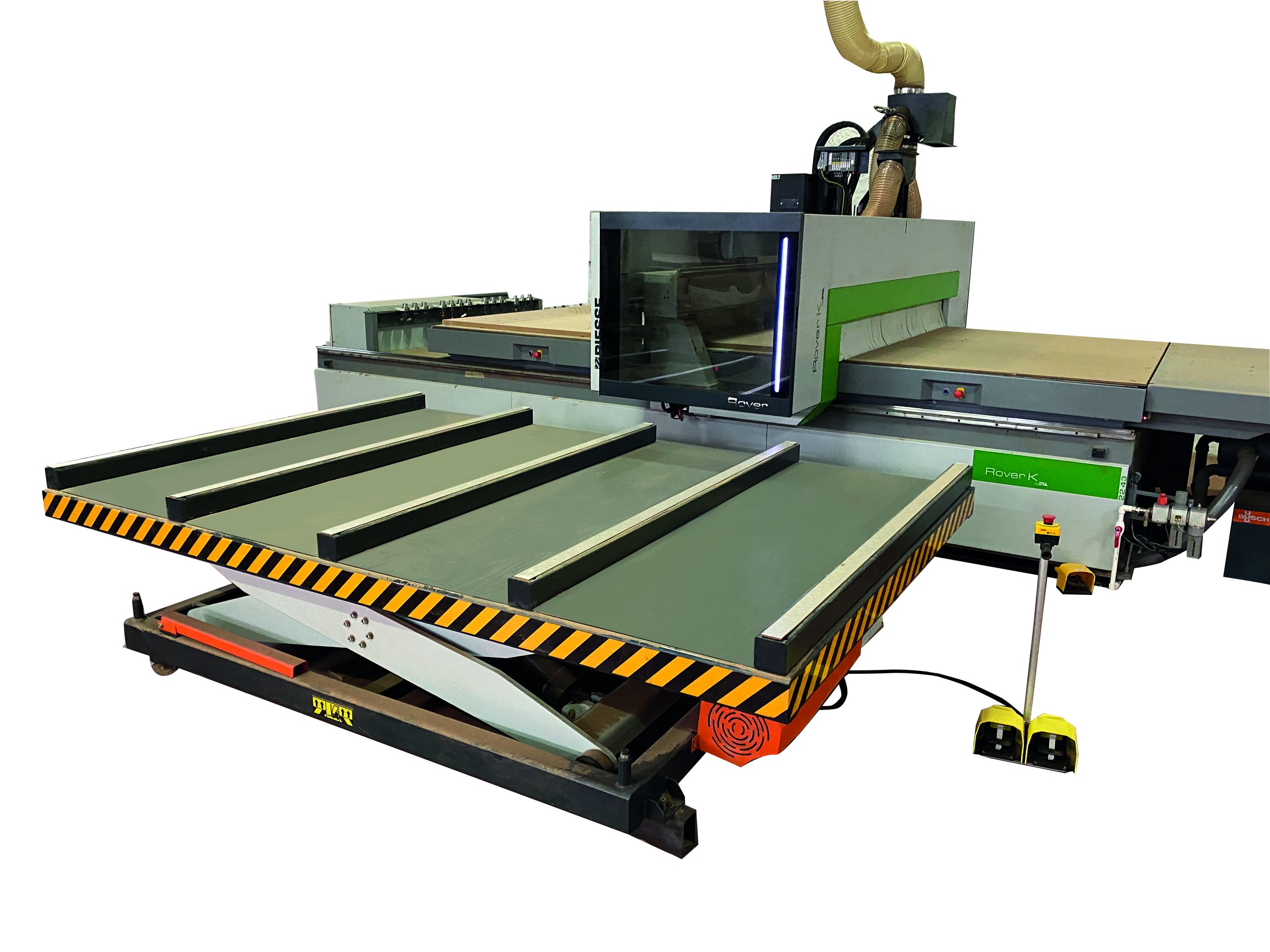
Panel Saw Loading Lift
View Loading Lift for Panel Saws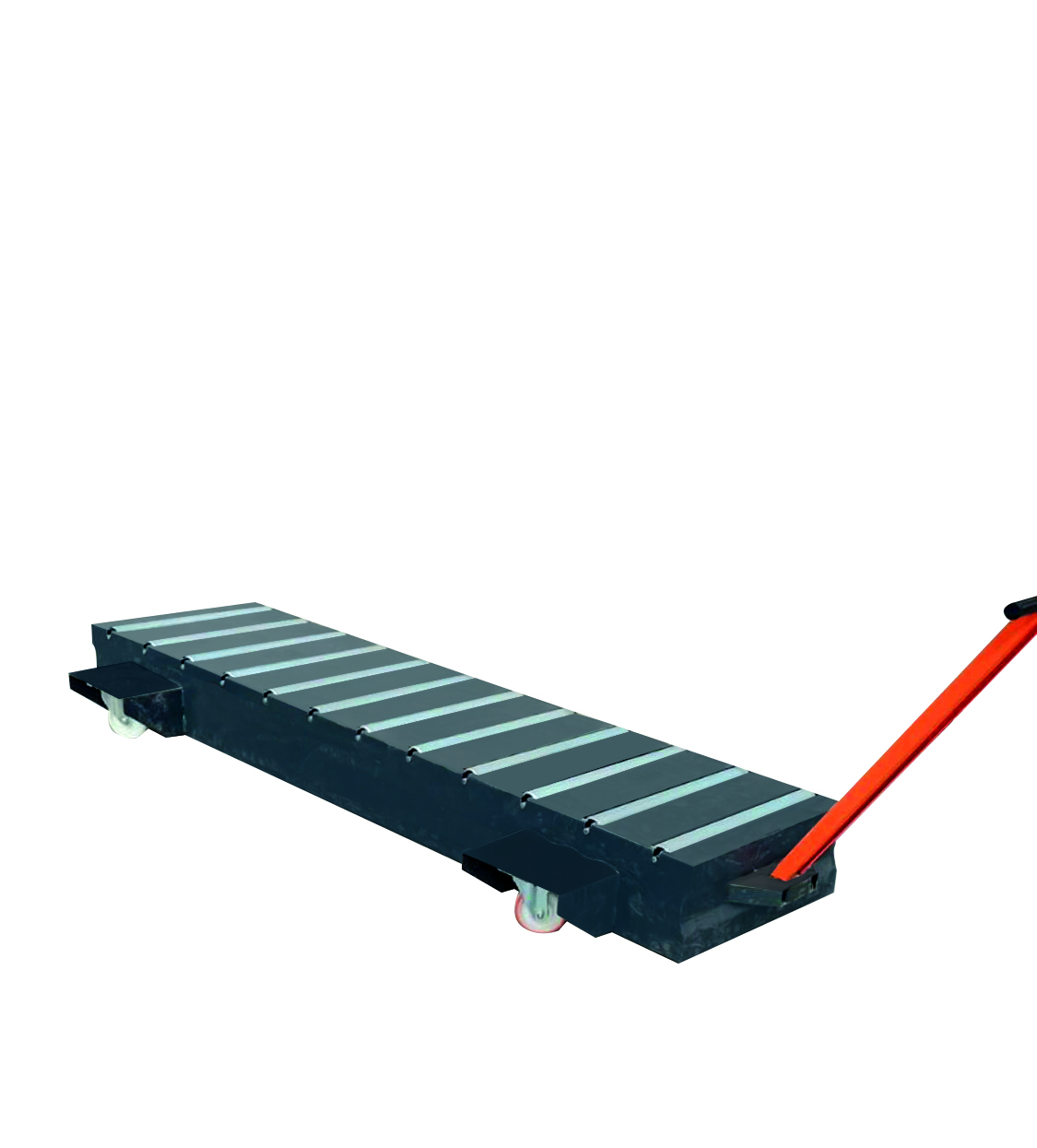
Free-Moving Roller Trolley
View Roller Trolley for Wood Panels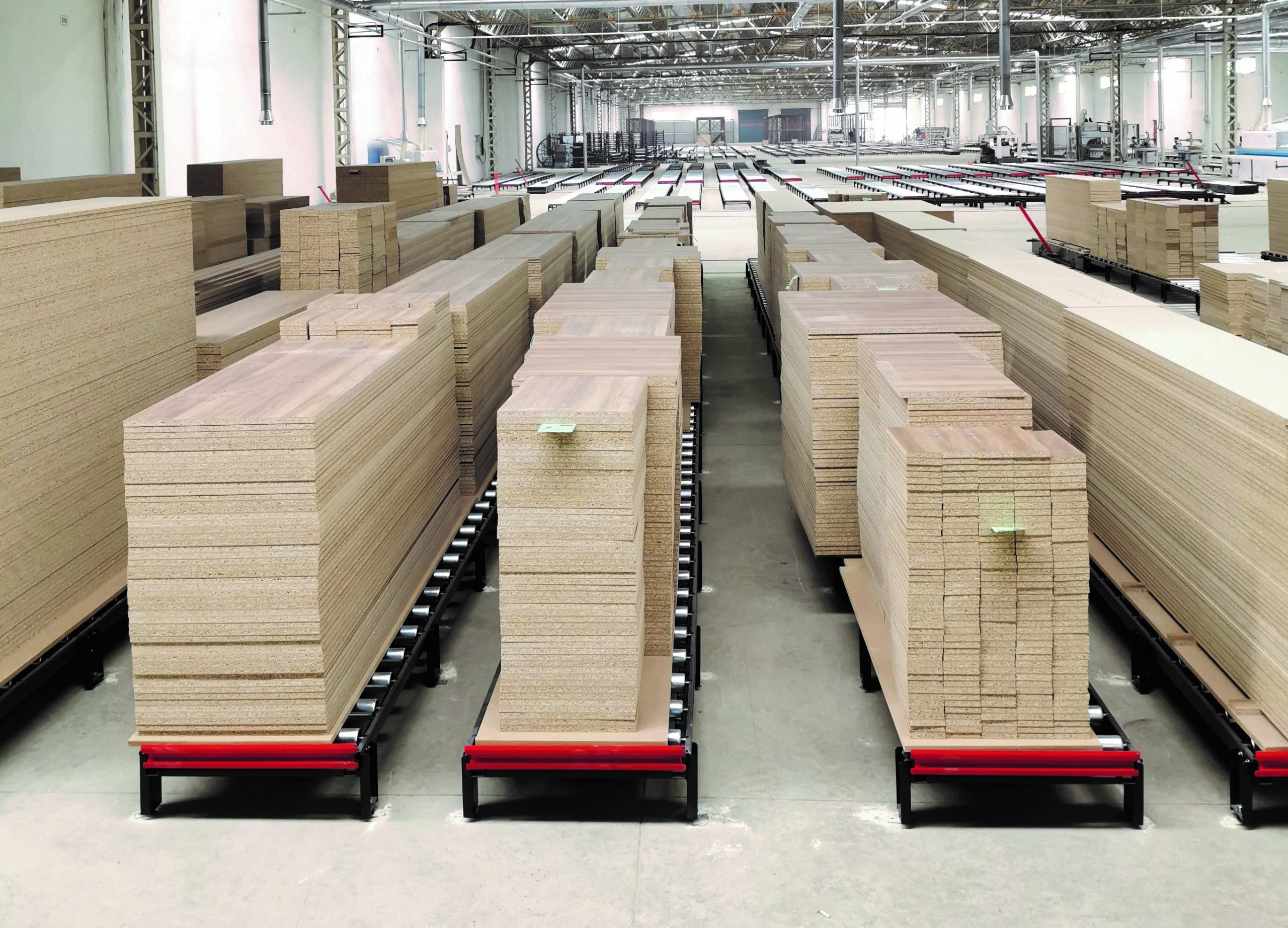
Manual Roller Conveyor
View Manual Roller Conveyor for Wood Panels
Belt Conveyors
View Panel Transfer Belt ConveyorsChoosing Equipment for Your Production Line
Feeding panel saws and CNC routers
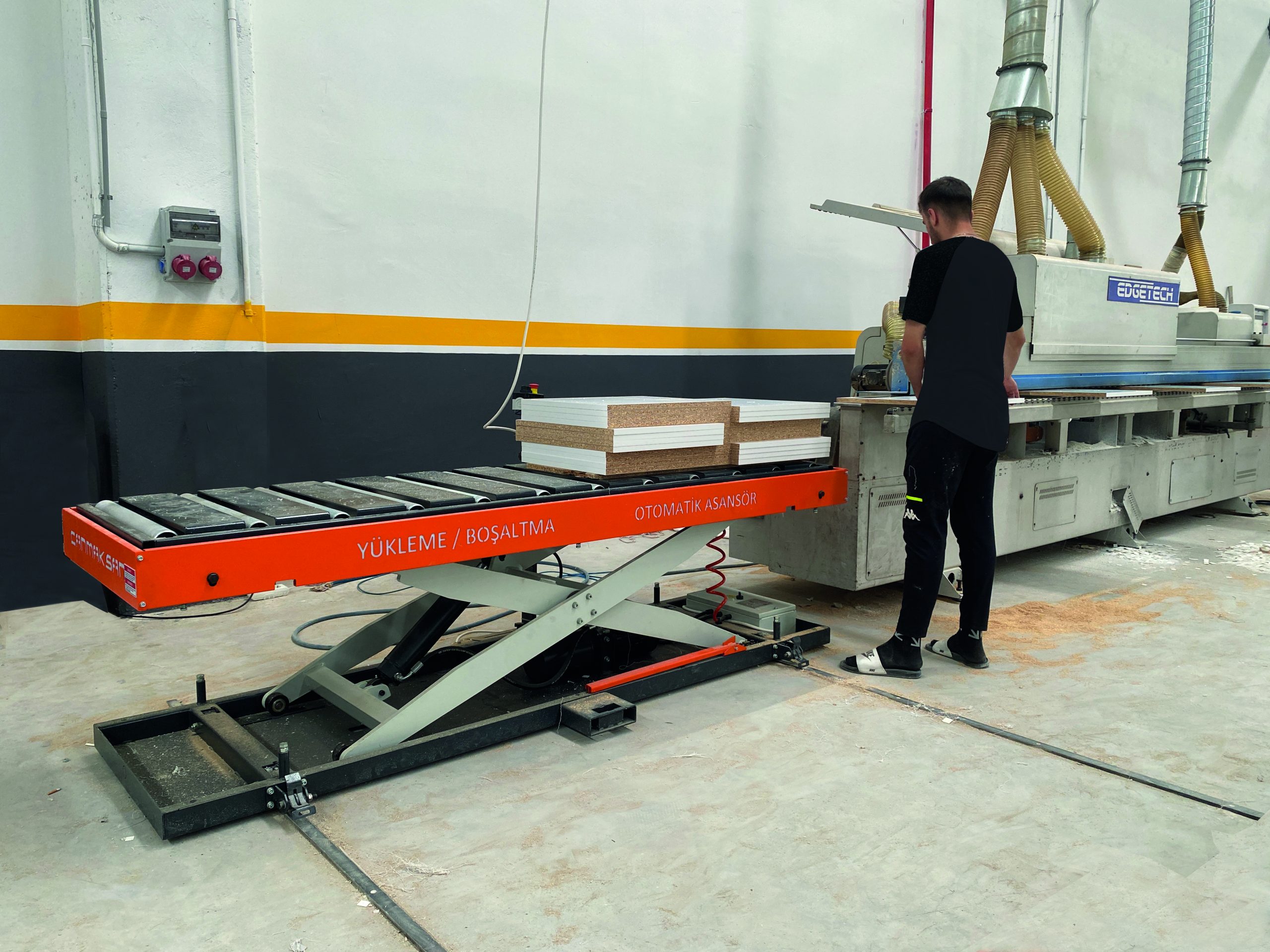
The Panel Saw Loading Lift raises stacked panels to a practical working height at a front-loading panel saw or CNC line. The Loading and Unloading Lift helps maintain stack height at machine infeed or outfeed. When the operator removes a panel, the platform rises by the thickness of that panel.
Moving panels through edge banding and between stations
A Manual Roller Conveyor suits fixed paths where an operator pushes cut panels toward edge banding, inspection or another processing station. Use a Free-Moving Roller Trolley when panels need to leave that fixed path for a different station or a staging area. For regular infeed or outfeed that requires a continuous conveying surface, Belt Conveyors are configured to suit the material and production layout.
Frequently Asked Questions
How do I choose the capacity of a panel loading lift?
The Panel Saw Loading Lift is available with a 1,300 × 2,600 mm (approx. 51.18 × 102.36″) platform rated at 3,000 kg (approx. 6,614 lb) or a 2,000 × 3,000 mm (approx. 78.74 × 118.11″) platform rated at 5,000 kg (approx. 11,023 lb). Base the selection on the largest panel, the heaviest stack including its pallet, and the machine infeed height.
How can panel handling equipment fit an existing CNC or edge banding line?
Check infeed and outfeed heights, the direction of panel travel and the available space between stations. A fixed route, a change in direction or the need to distribute panels across several stations will determine which transfer equipment fits the line.
Can the system handle non-standard panel dimensions?
Conveyor length, roller dimensions and load capacity depend on production requirements. Belt conveyor dimensions are also specified according to the material being moved and the available space on the production floor.
What information should I send for a technical quote?
Share your smallest and largest panel dimensions, maximum single-panel or stack weight, and current machine infeed and outfeed heights. A line layout or sketch is helpful. Include the loading and unloading directions and the required material flow so the equipment can be matched to your process.
Panel Handling Systems — Video
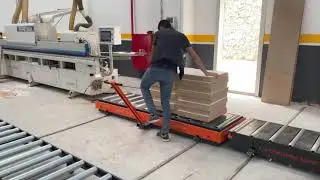
Plan how panels move from storage to machining, finishing and dispatch. Share your panel dimensions, load weights and line layout so we can assess suitable lifts, roller conveyors and trolleys.
Request a Technical Quote →Discuss Your Application on WhatsApp →
Technical selection criteria
- Check the heaviest load, load distribution and largest panel or stack footprint.
- Match lift travel and transfer height to each workstation.
- Compare gravity and powered roller options for panel support and flow.
- Check turning space, transfer direction and clearance for operators and vehicles.
- Confirm safeguarding and interface requirements with adjoining machines.