Manual Outfeed Roller Conveyor
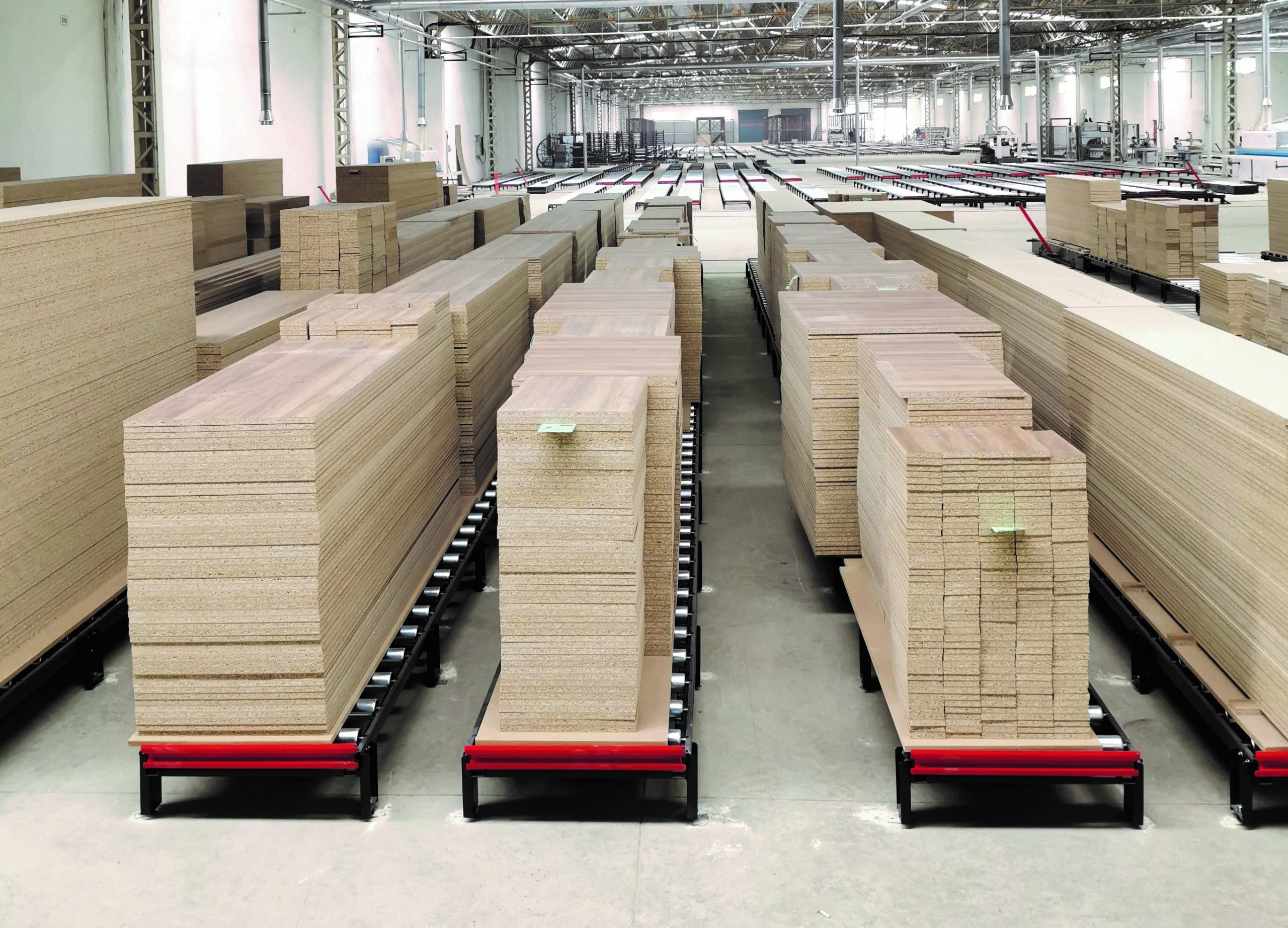
A manual outfeed roller conveyor supports panels as operators move them by hand from a machine to the next workstation.
Operators push panels along unpowered rollers from one workstation to the next. Line length, roller dimensions and load capacity are determined by production requirements.
Manual Outfeed Roller Conveyor — Technical Specifications
| Roller tube | Ø60 × 2 × 600 mm (approx. Ø2.36 × 0.08 × 23.62″) |
| Roller shaft | Ø12 × 640 mm (approx. Ø0.47 × 25.20″) |
| Bearing | 6201 ZZ |
| Roller finish | Galvanized |
| Rollers per metre | 5 / 1000 mm (approx. 5 / 39.37″) |
| Frame | RAL 7016 |
Benefits for Your Production
The rollers support panels along the transfer path and can reduce lifting between workstations. Match the conveyor length and load capacity to the panels handled and the way the stations are arranged.
Production Line Use Cases
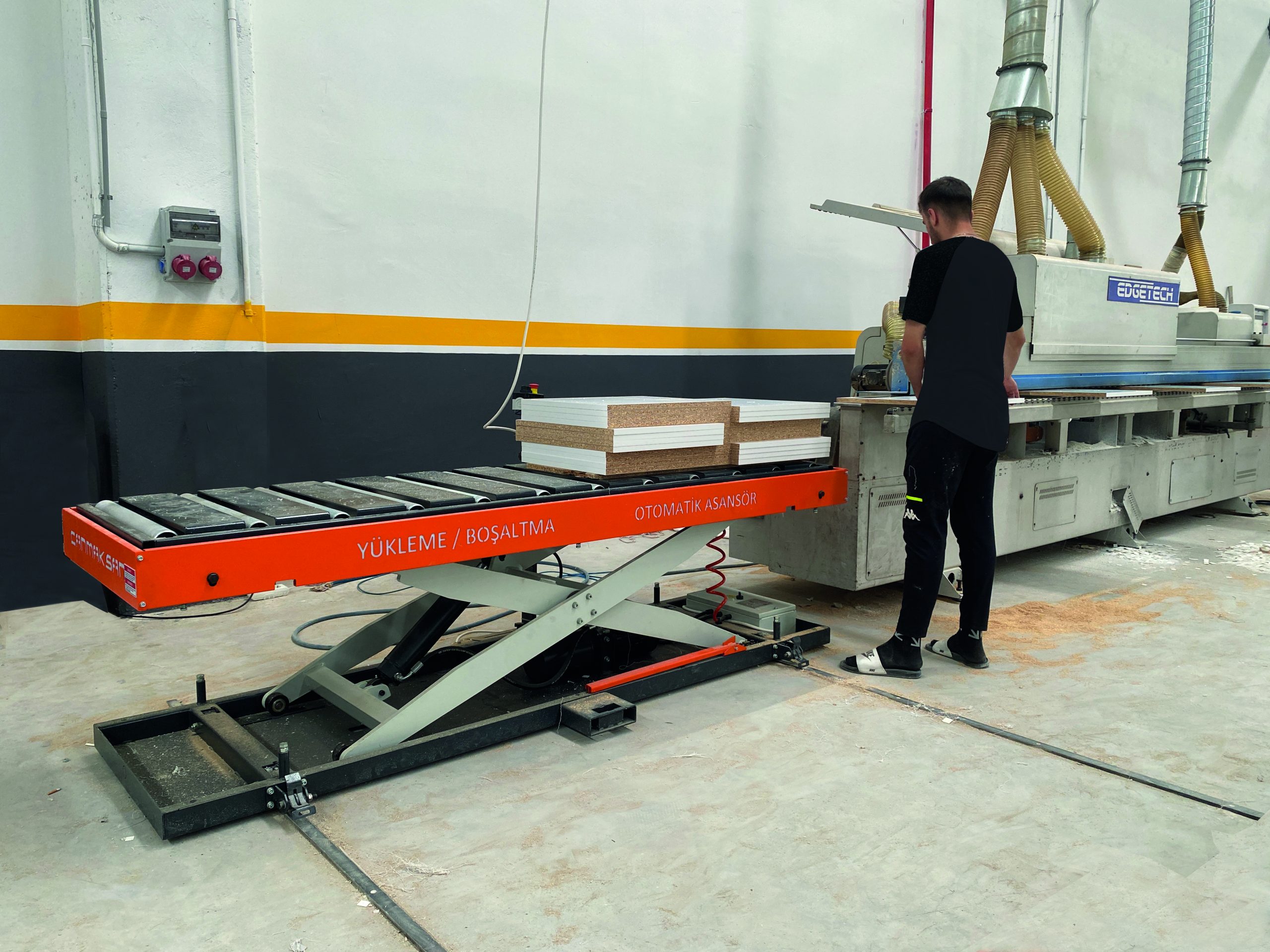
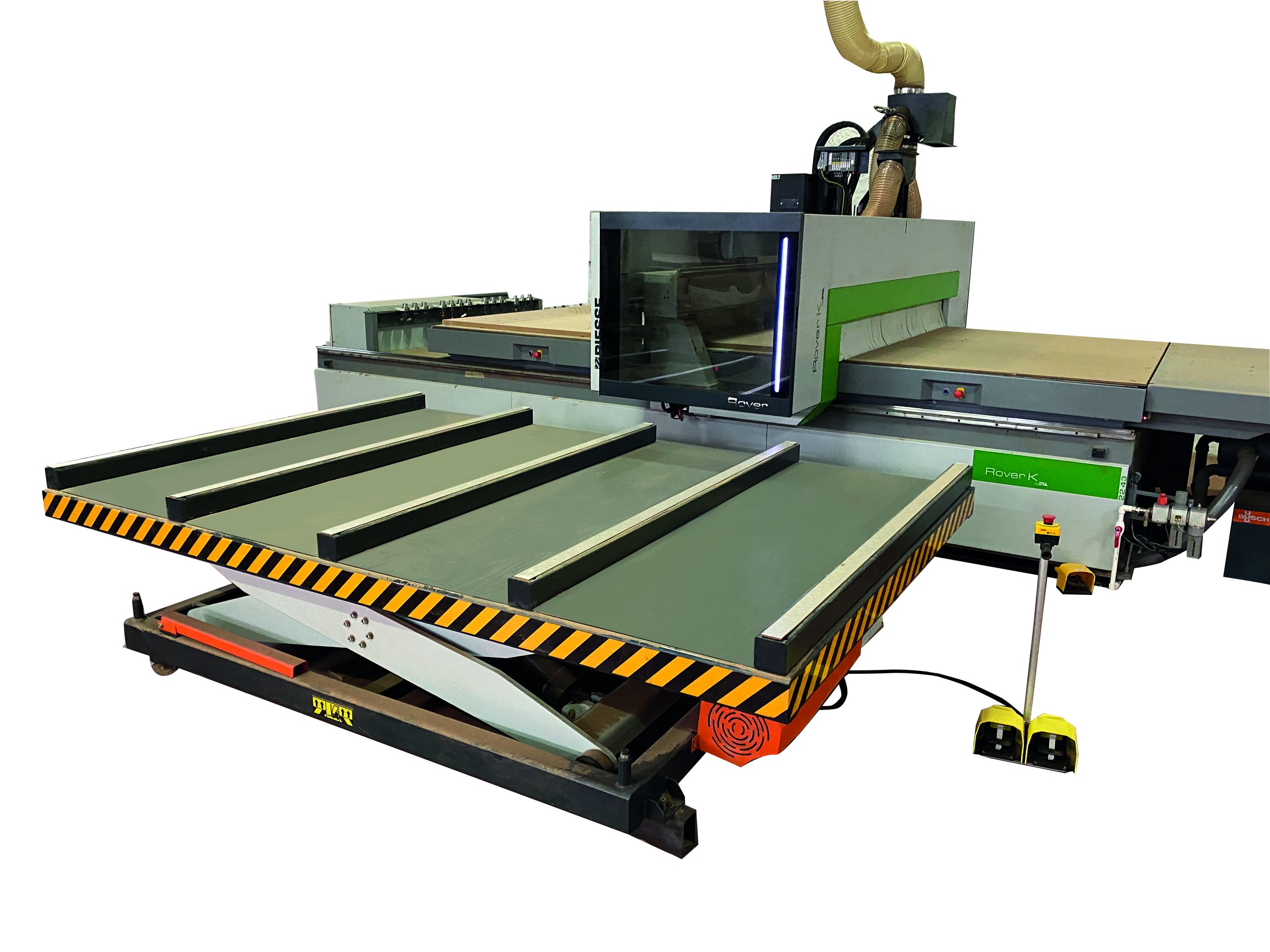
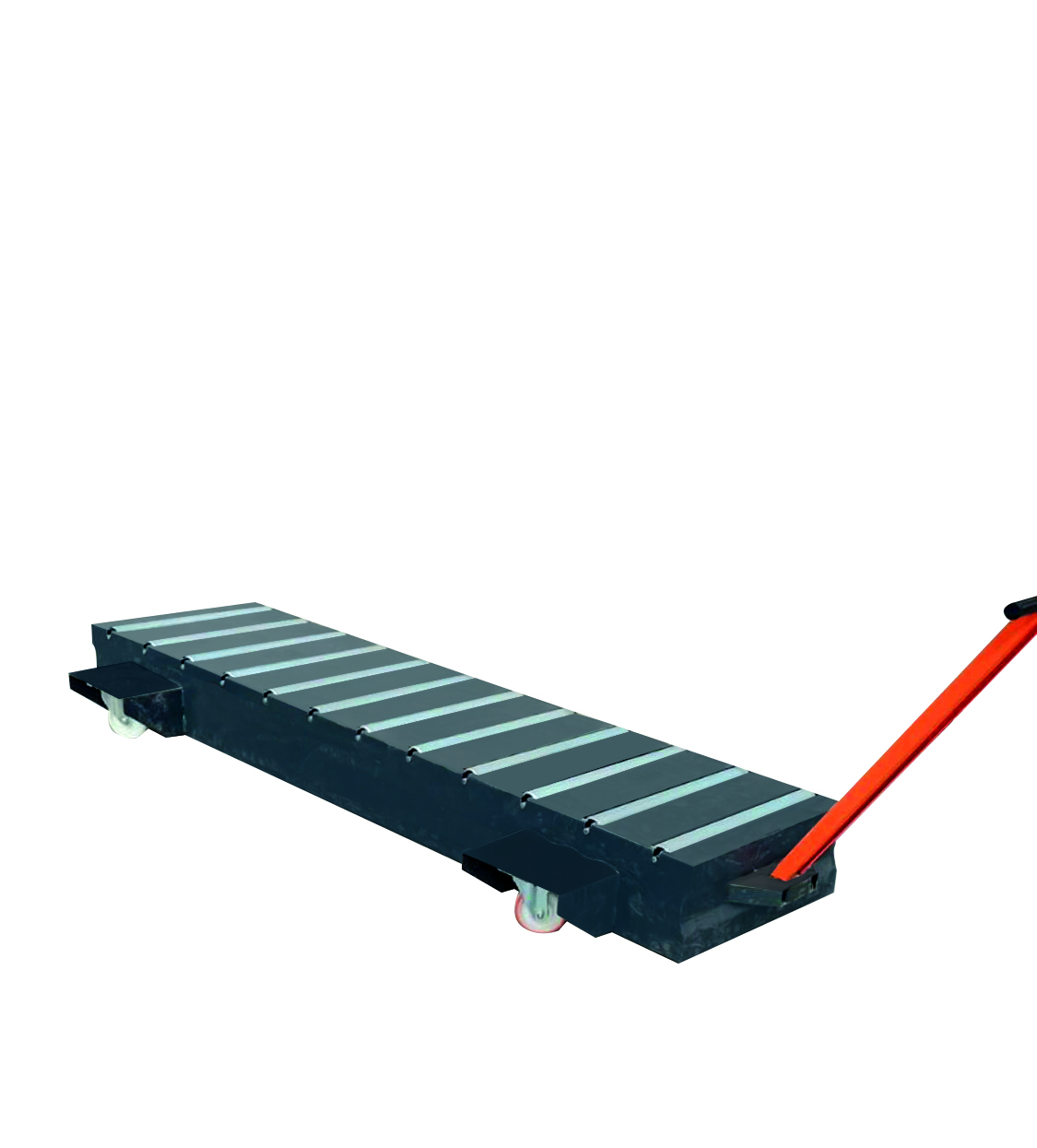
At a panel saw outfeed, an operator can push cut parts along the rollers toward an edge bander, CNC router or inspection station. For parts travelling outside the fixed path, use a roller transfer trolley. A loading and unloading lift can bring a panel stack closer to feeding height. See the other panel handling systems when planning the route. Before specifying the route, establish where the operator will place the panel, how it will travel and where it will be picked up.
Frequently Asked Questions
Does this conveyor need a powered drive?
The rollers are unpowered. The operator moves the panel by pushing it along the roller bed.
What are the roller tube and shaft dimensions?
The technical table lists a Ø60 × 2 × 600 mm (approx. Ø2.36 × 0.08 × 23.62″) roller tube and a Ø12 × 640 mm (approx. Ø0.47 × 25.20″) roller shaft.
How are length and capacity determined?
Use the panel dimensions and weight, distance between stations and the required machine entry height when choosing the configuration.